
Publications
Russia solves its wartime problems by creating new ones elsewhere
For much of the war, the Kremlin has managed something initially improbable: fighting a major war in Europe while keeping everyday life in much of Russia recognisably normal. However, that image is becoming harder to maintain. In summer 2026, Ukrainian drones struck refineries and industrial sites deep inside Russia. Petrol shortages and rising prices have reached regions far from the front. Airport closures and mobile-internet shutdowns have become routine. Finally, fear of another military mobilisation grew ahead of September’s State Duma elections. None of this means Vladimir Putin’s regime is close to collapse. Russia’s economy has repeatedly absorbed shocks and redirected resources. But resilience is not the absence of vulnerability. The question at hand is not when Russia will break, but where and how its wartime chokepoints are emerging.
The impossible task of Russia’s domestic governance lies in reconciling political control with economic effectiveness. The Kremlin needs a system capable of sustaining an inconveniently prolonged war while also keeping it politically manageable. However, the more the regime prioritises loyalty and centralised control, the more it sacrifices effectiveness and shifts costs elsewhere. This logic manifests itself in military, technological, economic and political realms.
The Wagner mutiny exposed this mechanism in the most dramatic way. After Yevgeny Prigozhin’s rebellion, Putin’s system has depended on risk-averse loyalty while periodically relying on informal actors to compensate for rigid formal institutions and corruption. Wagner was one such “pocket of efficiency”: its autonomy made it useful on the battlefield, but also politically dangerous. Weak and corrupt institutions force the regime to resort to exceptional solutions, which in turn create political risks. Those risks are met with more political centralisation. And the cycle repeats.
The more the regime prioritises loyalty and centralised control, the more it sacrifices effectiveness and shifts costs elsewhere.
More aggressive military recruitment may now provide the next test. Russia’s authorities tried hard to avoid repeating the disruptive mobilisation of September 2022 by relying on costly contracts, regional recruitment campaigns, migrants, prisoners and other targeted sources of manpower. But the existing recruitment model is becoming harder to uphold while battlefield losses remain high. Another nationwide mobilisation would provide manpower more directly to the front but spread the costs of war across society, including big cities, thereby making the war even more visible. That visibility is likely to heighten anxiety further and erode confidence that the regime retains full control over developments on the battlefield.
Ahead of September’s State Duma elections, the Kremlin tightened the screws even further, as accumulating crises increasingly undermined its claim to be keeping the situation under control. The exclusion of Yabloko, the only registered party openly campaigning against the war, illustrates how little political uncertainty the regime is willing to tolerate.
Veteran reintegration adds another deferred cost. Russia now faces an unprecedented number of former combatants whose expectations have been inflated by high wartime pay, extensive benefits and officially elevated social status, while these privileges may themselves generate resentment in civilian society. Crimes committed by veterans have already become a concern. The Kremlin is trying to pre-empt the problem by promoting selected veterans into regional administrations, but such carefully managed appointments can neither absorb nor represent the much broader veteran population. This is unlikely to produce an organised challenge to Putin in the near term. The more plausible risk is a diffuse accumulation of grievance, crime and social tension that becomes significantly harder to manage once large-scale demobilisation begins.
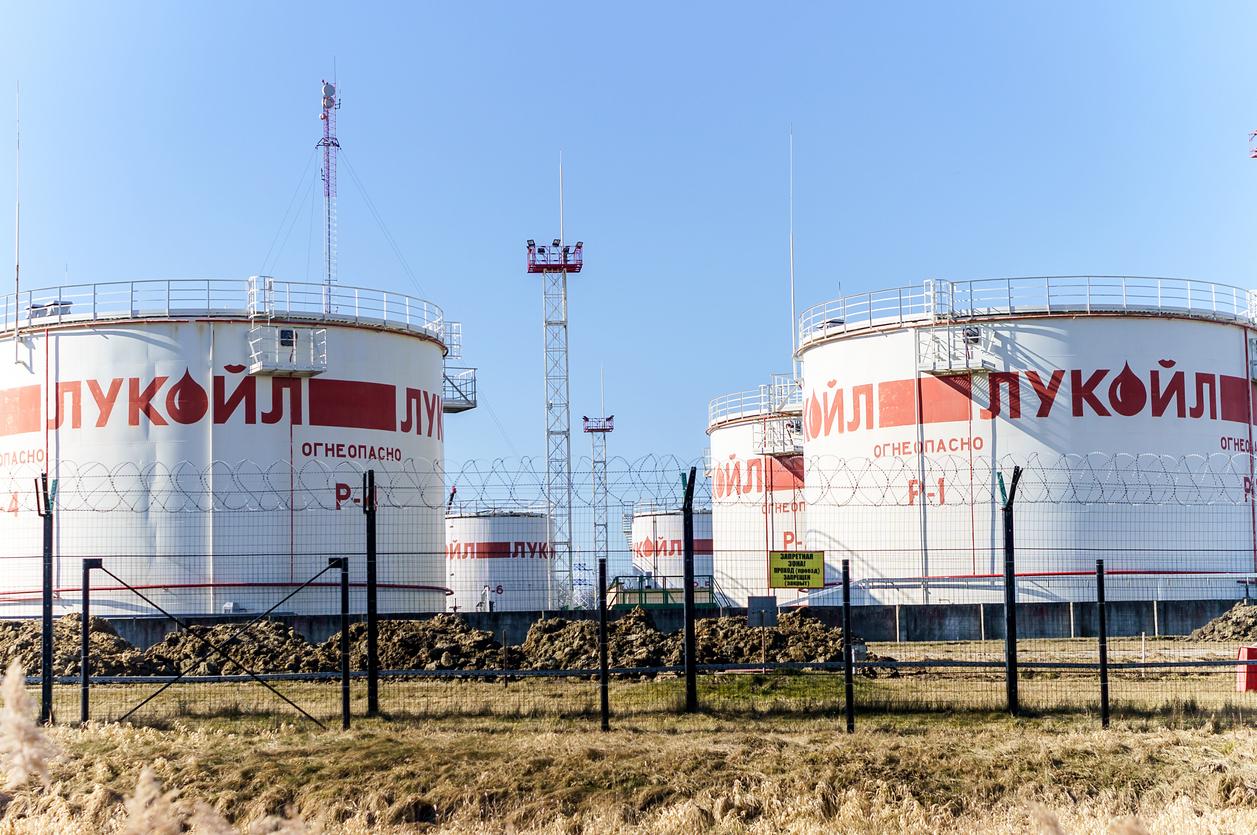
The war is increasingly arriving through infrastructure rather than politics. Ukraine’s long-range strikes have hit refineries, oil depots and military-industrial facilities deep inside Russia. In August, attacks again reached major sites in Tatarstan, Bashkortostan and Samara. No individual strike changes the war’s trajectory, but repetition creates a cumulative effect as air defences are stretched thin, airports close and supply chains are rerouted. Thus, the system continues to function, but less predictably and at greater cost.
Europe should look for chokepoints, not a breaking point.
Fuel makes these costs unusually tangible. Even Russia’s official statistics showed that by late July average petrol prices were 19% higher than at the end of 2025, with diesel around 20% higher. For a major hydrocarbon producer, shortages and petrol queues carry symbolic as well as economic weight. They do not automatically create anti-war sentiment, but they clearly disrupt the image of normality.
Digital control follows the same logic. Russia has moved from blocking content towards controlling connectivity itself. Mobile-internet shutdowns, justified partly as protection against Ukrainian drones, have disrupted payments, taxis, ATMs and businesses. The state gains coercive and security capacity, but at the cost of economic and administrative effectiveness.
Seen separately, none of these problems is decisive. Russia can recruit more soldiers, repair refineries, reroute flights, manipulate elections, restrict connectivity and subsidise affected regions. But viewed together, the picture is one of cumulative degradation: each workaround solves an immediate problem while creating costs elsewhere.
Europe should therefore look for chokepoints, not a breaking point. The task is not to predict spectacular regime collapse, but to identify the trade-offs that make Russia’s adaptation increasingly expensive. Russia’s wartime resilience is real. So are the costs required to sustain it.
Why does this matter now?
The war’s costs are increasingly leaking into ordinary Russian life just as manpower pressure and September’s elections have narrowed the Kremlin’s room for politically painless adaptation.
What needs to change?
Europe should focus less on whether the system is approaching collapse and more on making the trade-offs for Russia harder to manage.
What needs to be done?
Europe should target the technological, industrial and financial dependencies that make Russia’s workarounds costlier, while tracking where mobilisation and infrastructure disruption begin to make each other worse.
Margarita Zavadskaya is a Senior Research Fellow at FIIA. She holds a Ph.D. in Social and Political Sciences from the European University Institute (Fiesole, Italy, 2017). She has worked at the Electoral Integrity Project (Universities of Harvard and Sydney, 2015), the European University at St. Petersburg (2016-2022), and the Aleksanteri Institute at the University of Helsinki (2018-2022) as a researcher and lecturer.
This text was published as part of the HSF 2026 Report on October 2026. You can read all articles from the report here.
Photo: iStock
The era of single-solution security is over: Helsinki Security Forum 2026 explores new layers of security
The era of single-solution security is over. In a world shaped by disruption and competition, resilience no longer stems from…

Miten Suomi turvataan? Helsinki Security Forum -konferenssi käynnistyy avoimella keskustelutilaisuudella
Suomen turvallisuusympäristö monimutkaistuu. Venäjän strateginen voimapolitiikka, kansainvälisten riippuvuuksien hyödyntäminen valtapolitiikan välineinä sekä suurvaltojen kasvavat etupiirivaateet horjuttavat sääntöpohjaista järjestelmää. Samalla Yhdysvaltain…

Call for Applications: Youth Delegates for Helsinki Security Forum 2025
Are you a young professional interested in foreign and security policy? Would you be interested in taking part in Helsinki…

About the author
Margarita Zavadskaya
Senior research fellow
Margarita Zavadskaya holds a Ph.D. in Social and Political Sciences from the European University Institute (Fiesole, Italy, 2017). She has worked at the Electoral Integrity Project (Universities of Harvard and Sydney, 2015), the European University at St. Petersburg (2016-2022), and the Aleksanteri Institute at the University of Helsinki (2018-2022) as a researcher and lecturer. From 2019 to 2022, Zavadskaya served as PI for the research project ‘Electoral Malpractice, Cybersecurity and its Political Consequences in Russian and Beyond (ElMaRB)’.
Zavadskaya has broadly published on the role of elections in authoritarian states, mass protests and public opinion in journals such as Democratization, East European Politics, Post-Soviet Affairs, Russian Politics, Europe-Asia Studies and many others.