
Publications

Nordic military cooperation as an enabler and hedge
Finland’s and Sweden’s NATO memberships have led to increasingly deep military cooperation among the Nordic countries, particularly within the “Fennoscandian trio” of Finland, Sweden, and Norway. NATO’s Nordic enlargement has brought strategic clarity to Northern Europe. Together, the Nordic countries form a uniquely coherent group of states that can serve both as a critical enabler of NATO’s collective deterrence in Northern Europe and as a hedge against any reduction in the United States’ role in European security.
The integration of all five Nordic states into NATO creates unprecedented opportunities for defence cooperation. The Nordic countries share broadly similar threat perceptions, focus on deterring Russia, and are increasingly aligning their defence doctrines. Geography offers both the Nordics and NATO as a whole strategic depth and operational synergies: Norway’s Atlantic coastline and control of vital sea lines of communication; Sweden’s role as a logistical hub with a strong defence industrial base; and Finland’s strong army and extensive land border with Russia. Together, these features create complementary roles within the regional defence architecture. All three are also investing heavily to bolster their military capabilities.
Nordic cooperation, formalised through NORDEFCO and reinforced by bilateral and trilateral agreements, has reached a new level of ambition stated in the New Vision for Nordic Defence Cooperation 2030. The scope of this cooperation is evident in several initiatives: the Nordic Air Command concept aims to integrate over 250 advanced combat aircraft into a single operational framework, enabling rapid and flexible airpower in crises; a Nordic military mobility corridor from Norwegian ports, through Sweden, to Finland enhances NATO’s ability to reinforcement its new Finnish frontline; and Defence Cooperation Agreements with the United States open critical infrastructure to allied use. The planned Forward Land Forces battlegroup – “the Arctic FLF” – to be established in Finnish Lapland and led by Sweden, provides a significant symbolic marker of NATO’s evolving posture and deepening Nordic cooperation.
For NATO, a cohesive Nordic grouping delivers substantial operational benefits.
For NATO, a cohesive Nordic grouping delivers substantial operational benefits. The High North and the Baltic Sea are increasingly viewed as a single strategic direction, and Nordic integration strengthens the Alliance’s capacity to plan, exercise, and, if necessary, fight across the entire theatre. Nordic cooperation also serves as a force multiplier for NATO’s new Regional Plan Northwest, which likely depends on local forces holding key terrain until reinforcements arrive.
Nordic cooperation is not only about complementing NATO’s deterrence posture – it also has intrinsic value as a hedge in an uncertain transatlantic environment. The United States remains central to European security, but recent political shifts in Washington, including more transactional approaches to NATO, have prompted serious European debates about a future with reduced American involvement.
In such a scenario, a robust Nordic defence cluster could form the core of a “Plan B” for Northern European security. While no combination of European allies could fully replace US military power – particularly its nuclear umbrella – closer Nordic integration could help sustain credible deterrence and defence in the region. Affluent, technologically advanced, and supported by strong defence institutions, the Nordic states have the capacity to significantly expand capabilities, increase force generation through enhanced conscription, and invest in critical enablers such as intelligence, surveillance, and precision-strike systems.
Without US enablers, even the most integrated Nordic force posture would face constraints in high-intensity conflict against Russia.
Nordic cooperation is also embedded in the evolving European security architecture and the drive for stronger burden-sharing. The United Kingdom, with its operational experience and maritime reach, and France, with its nuclear capabilities and expeditionary forces, are natural partners. Increasingly, there is also demand for deeper Nordic–Baltic–Polish coordination in foreign and defence policy, reflecting the countries’ shared outlook on European security – particularly on Russia and its threat potential.
Nordic military cooperation is not without challenges. Resource constraints stemming from the relatively small armed forces and economies of Nordic states, along with a curious political reluctance to present the countries as a bloc within NATO, can limit its strategic weight. The level of political urgency related to defence efforts and regional cooperation also varies in the Nordic capitals. Moreover, without US enablers, even the most integrated Nordic force posture would face constraints in high-intensity conflict against Russia. Nevertheless, the Nordics are well placed to enhance European burden-sharing, drive deeper regional integration, and coordinate deterrence signalling in Northern Europe. By doing so, they can strengthen NATO’s posture today while preparing for an uncertain tomorrow.
ACTION PLAN:
- Deepen integrated planning: Establish a formal Nordic division of labour aligned with NATO’s Regional Plan Northwest, clarifying frontline and hub roles in land, air, and maritime domains.
- Expand joint capabilities: Accelerate the Nordic Air Command initiative, broaden shared ISR and precision-strike capacities, and synchronise force generation models.
- Strengthen connectivity: Prioritise infrastructure and mobility investments along the Nordic military corridor, ensuring rapid reinforcement from Atlantic ports to Finland’s eastern border.
- Link Nordic and European efforts: Systematically connect Nordic defence initiatives with UK, French, and other European frameworks.
Matti Pesu is a Senior Research Fellow in the Finnish foreign policy, Northern European security, and NATO research programme at the Finnish Institute of International Affairs.
This text was published as part of the HSF 2025 Report. You can read all articles from the report here.
The era of single-solution security is over: Helsinki Security Forum 2026 explores new layers of security
The era of single-solution security is over. In a world shaped by disruption and competition, resilience no longer stems from…

Miten Suomi turvataan? Helsinki Security Forum -konferenssi käynnistyy avoimella keskustelutilaisuudella
Suomen turvallisuusympäristö monimutkaistuu. Venäjän strateginen voimapolitiikka, kansainvälisten riippuvuuksien hyödyntäminen valtapolitiikan välineinä sekä suurvaltojen kasvavat etupiirivaateet horjuttavat sääntöpohjaista järjestelmää. Samalla Yhdysvaltain…

Call for Applications: Youth Delegates for Helsinki Security Forum 2025
Are you a young professional interested in foreign and security policy? Would you be interested in taking part in Helsinki…
About the author
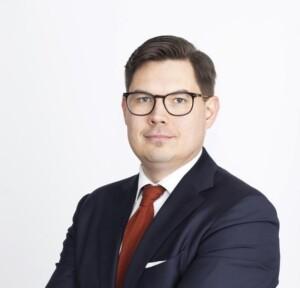
Matti Pesu
Senior Research Fellow
Matti Pesu is a Senior Research Fellow in the Finnish foreign policy, Northern European security, and NATO research programme at the Finnish Institute of International Affairs. He has led multiple research projects analyzing Finland’s security policy and NATO policy. Since the beginning of 2023, Pesu has been leading FIIA’s Nordic network.