Publications
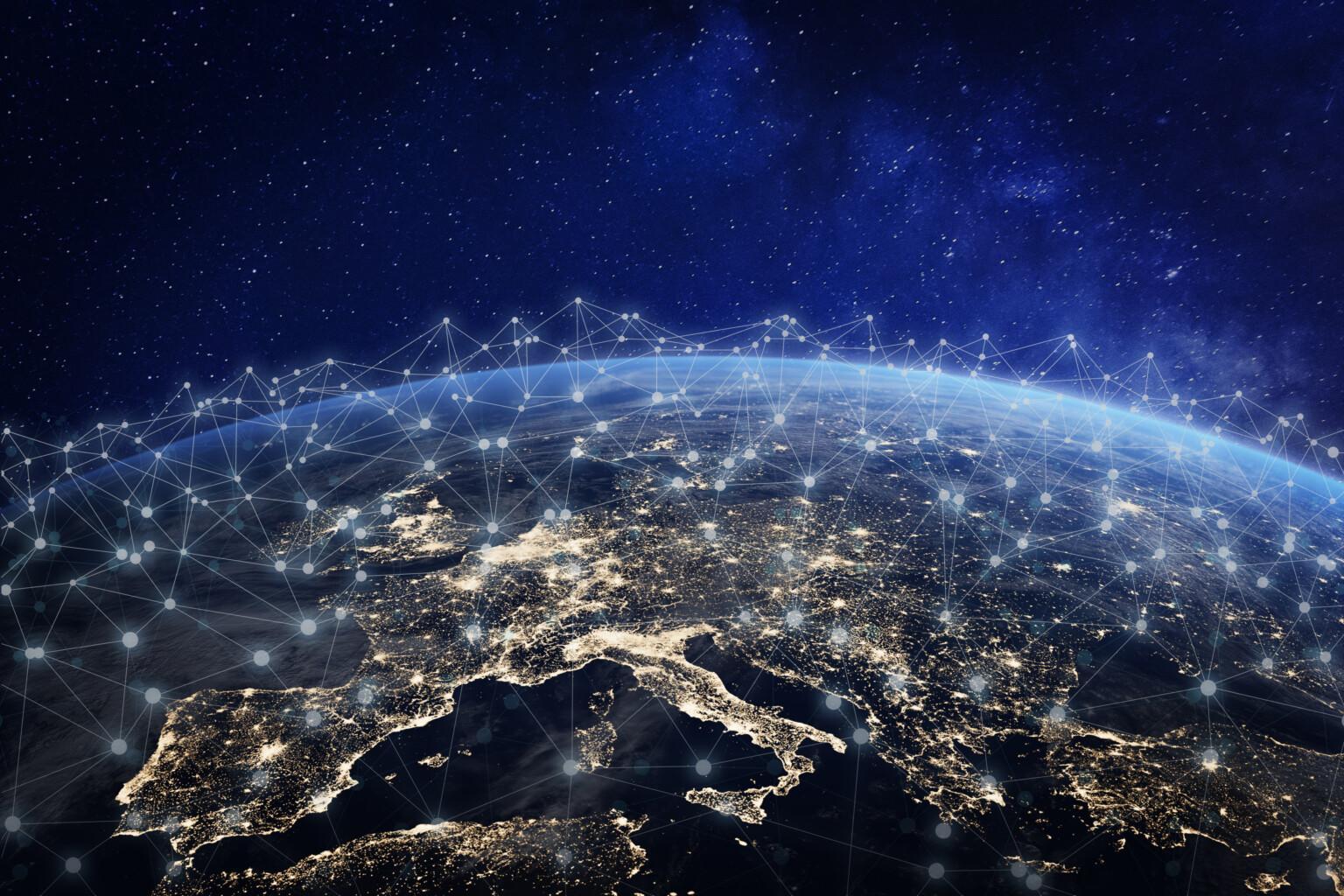
From drift to direction – Europe needs more than capital to compete in technology
Global technological competition is increasingly structured around two powerhouses. The United States leads through deep capital markets, global talent, defence procurement and digital firms capable of turning research into platforms of enormous scale. China’s model relies more heavily on long-term state direction, rapid technological deployment across a vast domestic market, infrastructure construction and manufacturing depth. Despite their differences, both systems connect innovation to finance, energy, production and demand.
Squeezed between these two technology giants, Europe’s technological downfall over the past two decades has been remarkable. It has lost ground through successive waves of innovation, from digital platforms and cloud computing to advanced semiconductors and artificial intelligence. Europe’s predicament is not simply the result of underinvestment. Policy-makers repeatedly underestimated how quickly the technological landscape was changing and how much scale the new technologies would require. Decisions that appeared defensible at the time, such as postponing infrastructure projects, imposing cumbersome rules and leaving little room for experimentation, gradually left Europe dependent on foreign computing capacity, digital platforms and advanced chips.
Europe’s technological downfall over the past two decades has been remarkable.
The result is an increasingly unfavourable and insecure technological position. Europe relies heavily on American cloud platforms and frontier artificial-intelligence models while depending on Asian producers for advanced semiconductor manufacturing and memory. Its internal fragmentation compounds these external dependencies: firms must navigate nationally divided capital markets, procurement systems, energy networks and regulatory practices. Promising companies face higher costs when expanding, while limited scale discourages investment and pushes customers, data and talent towards foreign platforms. Europe regulates and uses advanced technologies, but it depends heavily on non-European suppliers for several critical layers of the technological stack. The danger is dependence without leverage, alternatives or credible safeguards.
Mario Draghi’s report on European competitiveness correctly identifies the seriousness of this problem. It traces much of Europe’s productivity gap with the United States to digital technology and calls for unprecedented investment, deeper capital markets, greater policy coordination and a reduction of strategic dependencies. Its diagnosis is compelling: fragmented national policies are inadequate in a competition organised at continental scale.
Yet the Draghi agenda remains incomplete, because it treats capital as the binding constraint. Under strategic capitalism – the emerging order in which states actively shape markets to secure competitiveness and reduce dependencies – competitiveness depends on aligning three things at once: control over the resources and infrastructure innovation depends on, the ability to turn innovation into competitive European companies, and a clear direction for which technologies and sectors Europe wants to prioritise. Investment alone cannot restore competitiveness if data centres wait years for grid connections, if procurement stays divided by national borders, or if member states keep protecting national champions instead of the most capable firms.
Europe’s goals should be ambitious but realistic, concentrating on areas of proven strength: semiconductor equipment, robotics, industrial automation, cybersecurity and quantum technology.
When Europe strengthens one of the three – control, competitiveness or direction – without the others, it drifts into familiar traps: pouring money into national schemes that never scale into European competitiveness, or tightening control over technology flows without generating the innovation that competitiveness is meant to protect. Genuine strategic competitiveness requires all three to reinforce one another, coordinated across both national and EU levels. Europe needs not only more capital, but the institutional agility to direct it quickly towards what actually grows.
Europe’s goals should be ambitious but realistic, concentrating on areas of proven strength: semiconductor equipment, robotics, industrial automation, cybersecurity and quantum technology. In artificial intelligence, Europe’s clearest opportunity lies in industrial applications – from factories and energy grids to transport and healthcare – where its data, expertise and established companies provide a credible advantage.
Europe should also learn selectively from its competitors. From the United States, it should adopt stronger risk financing, faster commercialisation and public procurement that creates early markets. From China, it should learn to coordinate investment in infrastructure, energy, manufacturing and skills, and to deploy technology at speed, without importing either model’s disregard for the checks that make markets trustworthy.
The objective should be trusted scale, not full self-sufficiency. A more integrated European market, faster approvals, and closer partnerships with countries such as the United Kingdom, Canada, Japan and South Korea would help European firms grow while reducing critical dependencies. Europe cannot lead in every technology, but by aligning control, competitiveness and direction, it can remain indispensable in key sectors, secure access to what it cannot produce and offer the world a model built on scale, reliability and trust rather than drift.
Why does this matter now?
Strategic capitalism is rewriting the rules of technological competition, and every year Europe spends chasing capital rather than alignment is a year in which its dependencies deepen and its room for manoeuvre narrows.
What needs to change?
Europe must stop treating control, competitiveness and direction as separate policy tracks and start treating them as parts of the same strategy, with EU and national policy pulling in the same direction.
What needs to be done?
European policy-makers should concentrate resources on the sectors where Europe already has genuine strength, tie funding to performance rather than incumbency, and build the cross-border scale that lets European firms compete on their own terms.
Sinikukka Saari is an Acting Programme Director at the Finnish Institute of International Affairs. She works at FIIA’s Finland and Northern European Security programme and leads the cross-cutting theme Strategic Foresight at FIIA.
Mikael Wigell works as a Leading Visiting Fellow at FIIA. He is an internationally recognized pioneer in geoeconomics research and an expert in hybrid threats analytics. He currently serves as Chairman of The Geoeconomics Society, Member of the World Economic Forum’s Expert Network, and External Geopolitical Advisor to Burson.
This text was published as part of the HSF 2026 Report on October 2026. You can read all articles from the report here.
Photo: iStock
The era of single-solution security is over: Helsinki Security Forum 2026 explores new layers of security
The era of single-solution security is over. In a world shaped by disruption and competition, resilience no longer stems from…

Miten Suomi turvataan? Helsinki Security Forum -konferenssi käynnistyy avoimella keskustelutilaisuudella
Suomen turvallisuusympäristö monimutkaistuu. Venäjän strateginen voimapolitiikka, kansainvälisten riippuvuuksien hyödyntäminen valtapolitiikan välineinä sekä suurvaltojen kasvavat etupiirivaateet horjuttavat sääntöpohjaista järjestelmää. Samalla Yhdysvaltain…

Call for Applications: Youth Delegates for Helsinki Security Forum 2025
Are you a young professional interested in foreign and security policy? Would you be interested in taking part in Helsinki…
About the author
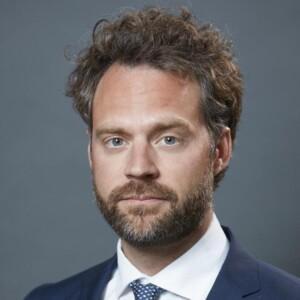
Sinikukka Saari & Mikael Wigell
Acting Programme Director & Leading Visiting Fellow
Sinikukka Saari is an Acting Programme Director at the Finnish Institute of International Affairs. She works at FIIA’s Finland and Northern European Security programme and leads the cross-cutting theme Strategic Foresight at FIIA. Saari’s fields of expertise include Russia’s foreign and security policy, Finland’s foreign and security policy as well as foresight in IR and Foreign Policy studies. She’s particularly interested in Russia’s relations with its neighbouring states and EU–Russia relations.
Prior to her current position, Saari worked as a Leading Researcher and as a Senior Researcher at FIIA, as an Analyst for the EU Monitoring Mission (EUMM) in Tbilisi, as a Senior Associate at EU Institute for Security Studies (EUISS) in Paris and as a Special Advisor for the Policy Planning and Research Unit at the Foreign Ministry of Finland. Saari received her PhD in International Relations from the London School of Economics and Social Sciences in 2007.
Mikael Wigell works as a leading visiting fellow at FIIA. He is an internationally recognized pioneer in geoeconomics research and an expert in hybrid threats analytics. Wigell has held visiting fellowships at the University of Cambridge and Oxford University. He currently serves as Chairman of The Geoeconomics Society, Member of the World Economic Forum’s Expert Network, and External Geopolitical Advisor to Burson.
He has led international research projects at the intersection of economics, geopolitics, hybrid threats, and resilience, funded by organizations such as the European Commission, NATO and the Nordic Council of Ministers. He also written reports and provided advice to organizations such as the Development Bank of Japan and the European Parliament. He is a former member of the Development Policy Committee of the Government of Finland. Wigell holds a PhD from the London School of Economics and the Title of Docent at Tampere University.