Publications
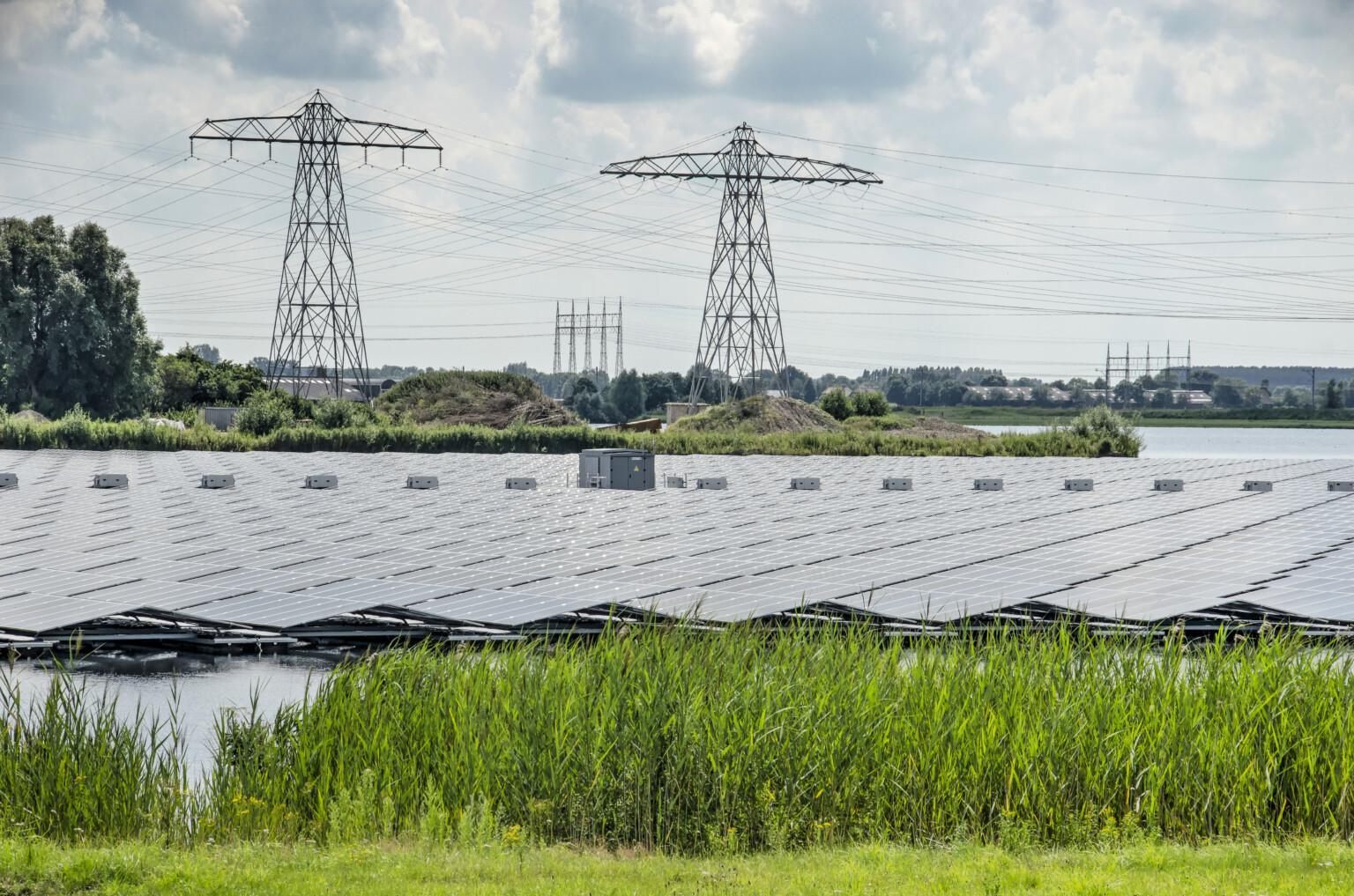
Europe’s latest energy shock lays bare the cost of fossil fuel dependence
2026 has been a year of energy crisis for Europe, and no quick solution is in sight. The US-Israeli attack on Iran, the closure of the Strait of Hormuz and Iranian retaliation against energy infrastructure in the Persian Gulf have led to serious supply disruptions, declarations of force majeure by producers and profound uncertainty about future trade.
For the European Union, the world’s largest importer of energy, 2026 marks the second major supply crisis in only four years, a ‘double shock’ that began with the loss of imports from Russia in 2022. Absorbing the first shock was complicated and only possible through fast diversification, the creation of new dependencies – notably on the United States and Middle Eastern producers – higher prices and partial deindustrialisation. The cumulative cost of the second shock may be even higher, as it comes in the context of a more acute security, economic and climate crisis.
Indeed, Europe’s energy crisis is not just about security. It affects every aspect of the ‘energy triangle’ – sustainability, affordability and equity, as well as security.
The sustainability crisis was for everyone to see in the summer. While the EU continued to burn large volumes of fossil fuels (often originating from dubious partners), unprecedented heatwaves and protracted droughts affected almost the entire continent and caused an estimated 10,000 excess deaths. The ramifications for the resilience and security of European energy systems are also clear. Drought affected hydropower production and river-based transport. Nuclear reactors in France and Hungary were switched off due to the lack of cooling water at a time of peak electricity demand linked to air conditioning. As far north as Poland, coal-fired power plants had to be put offline due to insufficient water in the Vistula River to cool them.
Europe’s energy security will no longer come from fossil fuels.
The economic side of the energy triangle is affected by both security and climate. The supply crises and the uncertain outlook have driven up energy prices, which in turn have led to generalised inflation. The cost of this situation is borne disproportionately by poorer Europeans and may further benefit anti-establishment parties, with elections looming in key EU member states in 2027. Meanwhile, beyond hindering the production of hydro- and nuclear power and causing spikes in electricity demand, the climate crisis has a wider effect on the European economy. Costs have been estimated at 1% of GDP in the summer of 2026 alone and may reach 5–7% in Southern and Central European economies by 2030. At a time of growing geoeconomic competition, the EU’s competitiveness is negatively affected by energy costs that are higher than those of many of its competitors.
In order to tackle this conundrum, Europe must consider a few essential facts in the energy-climate nexus. First, it is the fastest-warming continent with the largest cumulative historical emissions, together with the United States. Both present-day challenges and historical responsibilities require the EU to take urgent climate action. Second, Europe’s energy security will no longer come from fossil fuels. The unreliability of suppliers and supply routes, the sheer cost of fossil energy and the impact of further emissions on the continent have made this abundantly clear.
Paradoxically, resistance to ambitious climate action has been increasing. This is driven by the lobbying of energyintensive industry and industrial farming, rather than just the fossil fuel sector and the far right. Their positions are being mainstreamed in centre-right parties, which are turning their back on the European Green Deal, arguing that it places too great a financial and bureaucratic burden on companies.
Both present-day challenges and historical responsibilities require the EU to take urgent climate action.
However, it is becoming evident that the costs of inaction are higher. Europe is now, more than ever, faced with a transition imperative, dictated by both climate- and security-related realities. Continued attempts to dilute jointly agreed energy and climate targets will only slow the EU’s low-carbon development, widening the technological gap with China, undermining competitiveness and ensuring dependence on increasingly unreliable fossil fuel supply chains.
The EU must fully harness no-regret measures such as energy efficiency improvements and greater grid interconnectivity, while prioritising public support for innovation and clean technologies and ending subsidies for the fossil fuel sector. It must ensure the democratic legitimacy of the transition by providing direct income support and social protection measures to those disproportionately affected by price hikes or investment needs.
A coordinated effort, similar to that required by institutions and civil society during the Covid-19 pandemic, is necessary to facilitate the transition by adapting lifestyles and society, thereby also boosting resilience. A multilateral approach is also necessary to respond adequately to the global challenge of climate change and accelerate the energy transition. Hence, the EU must continue efforts to directly address the global climate crisis, building upon multilateral frameworks while also pushing for partnerships with other major actors such as China, Brazil, Japan and India.
None of the measures proposed here are fully novel. Most of them are included in the European Green Deal launched in 2019. Instead of diluting them, the EU should use them as a foundation for further ambition. Ultimately, not just the security, affordability and sustainability of energy systems depend on these efforts; it is a matter of Europe’s overall resilience in the face of an unprecedented climate crisis.
Why does this matter now?
Europe is facing a second major energy supply shock in four years, while climate change is simultaneously increasing the economic and security costs of relying on fossil fuels.
What needs to change?
Europe needs to address energy security, affordability and climate action as interconnected challenges.
What needs to be done?
The EU should improve energy efficiency and grid connections, invest in clean technologies, protect those most affected by the transition, end fossilfuel subsidies and strengthen international climate cooperation.
Emma Hakala is a Leading Researcher at the Finnish Institute of International Affairs. Her research focuses on environmental security and the geopolitics of climate change, such as the role of international actors in building climate security practices. She leads the project “Climate change and Finland’s security of supply” and a part on conflict analysis in the project “Water Cooperation and Peace – Finnish Water Way”, which FIIA implements as a partner of the Finnish Environment Institute (SYKE).
Marco Siddi is Leading Researcher at FIIA, where he is also Principal Investigator of the project Infrastructure/Institutions Match for Resilient & Just Green Electrification (2IMATCH), funded by the Strategic Research Council at the Research Council of Finland and led by Professor Pami Aalto. He is Associate Professor in Political Science at the University of Cagliari, Italy, Adjunct Professor in World Politics at the University of Helsinki and in International Relations at Tampere University.
This text was published as part of the HSF 2026 Report on October 2026. You can read all articles from the report here.
Photo: iStock
The era of single-solution security is over: Helsinki Security Forum 2026 explores new layers of security
The era of single-solution security is over. In a world shaped by disruption and competition, resilience no longer stems from…

Miten Suomi turvataan? Helsinki Security Forum -konferenssi käynnistyy avoimella keskustelutilaisuudella
Suomen turvallisuusympäristö monimutkaistuu. Venäjän strateginen voimapolitiikka, kansainvälisten riippuvuuksien hyödyntäminen valtapolitiikan välineinä sekä suurvaltojen kasvavat etupiirivaateet horjuttavat sääntöpohjaista järjestelmää. Samalla Yhdysvaltain…

Call for Applications: Youth Delegates for Helsinki Security Forum 2025
Are you a young professional interested in foreign and security policy? Would you be interested in taking part in Helsinki…

About the author
Emma Hakala & Marco Siddi
Leading Researchers
Emma Hakala is a Leading Researcher at the Finnish Institute of International Affairs. Her research focuses on environmental security and the geopolitics of climate change, such as the role of international actors in building climate security practices. She leads the project “Climate change and Finland’s security of supply” and a part on conflict analysis in the project “Water Cooperation and Peace – Finnish Water Way”, which FIIA implements as a partner of the Finnish Environment Institute (SYKE).
Hakala gained her D.Soc.Sci degree in political history at the University of Helsinki in 2018. Her doctoral dissertation focused on the securitisation of the environment and the role of international organisations in post-conflict Western Balkans. Hakala has previously obtained a Master’s degree in political history at the Faculty of Social Sciences at the University of Helsinki. Hakala is currently a Postdoctoral Researcher in the project “Toxic Crimes: Legal Activism against Wartime Environmental Destruction” at the University of Helsinki and a member of the multidisciplinary BIOS Research Unit.
Marco Siddi is Leading Researcher at FIIA, where he is also Principal Investigator of the project Infrastructure/Institutions Match for Resilient & Just Green Electrification (2IMATCH), funded by the Strategic Research Council at the Research Council of Finland and led by Professor Pami Aalto. He is Associate Professor in Political Science at the University of Cagliari, Italy, Adjunct Professor in World Politics at the University of Helsinki and in International Relations at Tampere University.
He is also a Board Member of the Trans European Policy Studies Association (TEPSA), a member of the European Leadership Network and of the ECPR Research Network on Energy Politics, Policy, and Governance. He received his PhD at the Universities of Edinburgh and Cologne, in the framework of the Marie Curie Training Network ‘Exact’ concerning the external action of the European Union. Siddi’s work focuses primarily on energy politics, the politics of memory and identity, European politics and EU-Russia relations.