Publications
Europe rearms – but is it ready to act?
It is spring 2027. A Russian drone strikes critical infrastructure in eastern Poland. Moscow denies responsibility, and the attack appears carefully calibrated to remain just below the threshold of open warfare. Poland invokes NATO’s Article 4, while allies debate whether the incident constitutes sabotage, an armed attack or a deliberate test of NATO’s ability to respond. For some allies, it marks a major escalation, bringing Russian aggression onto NATO territory. For others, it is little more than another Putin bluff.
This is a hypothetical scenario, but not a far-fetched one: undisclosed intelligence assessments reportedly circulated in early summer 2026 warned of possible Russian provocations, including a limited armed attack on Polish territory. Since Russia’s full-scale invasion of Ukraine in February 2022, European states have significantly strengthened their military preparedness. Defence spending among EU member states has risen from €197 billion annually in 2015 to €454 billion in 2026.
Yet the scenario above exposes different but equally important vulnerabilities that have received far less attention: the need for a shared situational picture, common principles to guide crisis responses, and institutions and networks that can be effectively mobilised.
First, the situational picture. While NATO prepares for a wide spectrum of aggression scenarios, developing a shared situational picture among 32 allies, or even the EU’s 27 member states, remains a political exercise. In the event of a Russian drone strike, the immediate challenge would be determining whether it can be confirmed that the drone was Russian and whether the incident constituted an attack on NATO territory. Attribution alone could take time, as recent drone incursions and cable sabotage across Europe have shown.
Strategic thinking in an increasingly contested international environment requires clarity about one’s own objectives and values.
The ability to interpret an attack collectively rests on a shared conception of European security. Europe has long pursued greater convergence in threat perceptions and strategic assessments. This has become increasingly urgent, as Europe can no longer assume that the US will provide the political leadership in framing an incident as a violation of European states’ sovereignty when it is one.
Second, principles. Crises test the common principles on which collective action depends. In a crisis like a Russian drone strike, Europeans would likely refer to international law to condemn the attack, justify a response and mobilise international support. NATO’s commitment to defend every inch of allied territory would also be cited.
The problem is that Europe’s own commitment to shared principles has raised concerns. Earlier this year, European responses to the US use of force against Iran left everyone confused about where Europe stands. The US was disappointed by the lack of meaningful European backing, while observers in the Global South interpreted Europe’s silence as evidence that it defends international law selectively.
Europe’s principles remain ambiguous and their application compartmentalised. Governments tend to focus on the immediate pressure of adopting an acceptable position, paying less attention to how today’s decisions affect Europe’s credibility and room for manoeuvre in future crises. Strategic thinking in an increasingly contested international environment requires clarity about one’s own objectives and values.
Third, institutions. An effective crisis response depends not only on capabilities but also on institutions able to manage and coordinate them despite shifting political realities. Much attention has been devoted to the consequences of a declining US role in NATO, but an equally important question is how a more European NATO is beginning to operate. Similarly, the EU must be able to function in crises, not least to provide financial backing for a member state under attack. But as things stand, a single opposing member state could halt EU decisionmaking even during a Russian attack.
European defence arrangements are becoming more differentiated, relying on national capabilities and regional frameworks. This offers opportunities: in crisis scenarios, regional groups can provide initial political coordination and military reinforcement, helping to prevent hesitation at the alliance level from turning into paralysis. In the event of an armed attack, Poland might also invoke the EU’s mutual assistance clause to mobilise broader political and military support.
Much attention has been devoted to the consequences of a declining US role in NATO, but an equally important question is how a more European NATO is beginning to operate.
Yet there is an urgent need to ensure that this differentiation does not become fragmentation that would obscure responsibilities in scenarios like the one above. Regional and minilateral initiatives should reinforce NATO’s collective decision-making rather than create competing centres of political authority. Moreover, important questions remain regarding NATO-EU cooperation in a crisis context. Clarifying these issues before a crisis occurs would strengthen Europe’s preparedness.
Fourth, networks. Ukraine’s experience in coping with Russia’s immediate and prolonged aggression offers one particularly important lesson for Europe: defence depends on broad international partnerships capable of rapidly mobilising and sustaining material support as military technologies evolve.
Political attention and resources devoted to European defence risk coming at the expense of broader international partnerships. This is short-term thinking. An alliance backed by extensive international support can insist on defending every inch of its territory, while an isolated alliance has less room for manoeuvre.
The next test of European security may not begin with Russian tanks crossing a NATO border. It may begin with a deliberately ambiguous act that forces Europeans to decide what has happened and what they are prepared to do about it. More weapons can give weight to that decision, but they will not make it for Europe.
European preparedness therefore requires more than rearmament. Europe needs the capacity to understand a crisis collectively, respond according to common principles, mobilise institutions quickly and sustain its response through international partnerships.
Why does this matter now?
Rearmament alone will not ensure Europe can respond to external aggression.
What needs to change?
Europe must shift from crisis management to strategic preparedness. Europe needs shared threat assessments, clear principles, effective institutions and strong international partnerships.
What needs to be done?
Europe should strengthen cooperation between national, NATO and EU assessment and planning bodies, clarify principles for collective action, stress-test how institutions would work together in a crisis, and invest in broad international partnerships that sustain defence.
Niklas Helwig is a Leading Researcher at the Finnish Institute of International Affairs and an Associate Professor in International Relations at Tampere University. His research focuses on EU foreign and security policy, German foreign and security policy, as well as EU-US relations. He currently co-leads an Academy of Finland-funded project on “Transforming strategic cultures in contemporary Europe” (STRAX).
Tyyne Karjalainen is a Research Fellow in the European Union research programme at the Finnish Institute of International Affairs (FIIA) since 2020, and a doctoral researcher in political science at the University of Turku since 2021. Her research focuses on European security, Ukraine, the EU’s foreign and security policies, and EU enlargement.
This text was published as part of the HSF 2026 Report on October 2026. You can read all articles from the report here.
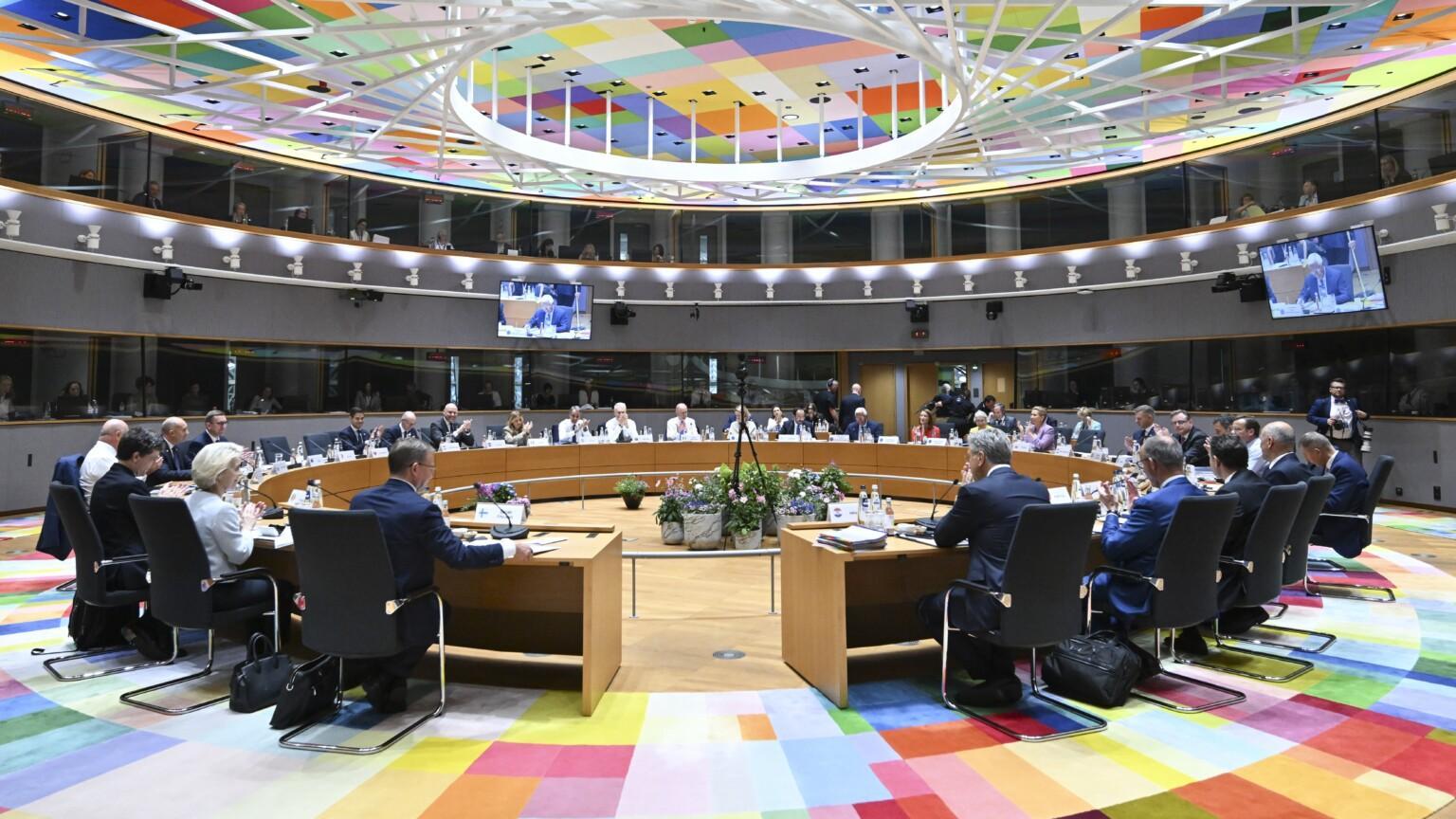
Photo: European Union
The era of single-solution security is over: Helsinki Security Forum 2026 explores new layers of security
The era of single-solution security is over. In a world shaped by disruption and competition, resilience no longer stems from…

Miten Suomi turvataan? Helsinki Security Forum -konferenssi käynnistyy avoimella keskustelutilaisuudella
Suomen turvallisuusympäristö monimutkaistuu. Venäjän strateginen voimapolitiikka, kansainvälisten riippuvuuksien hyödyntäminen valtapolitiikan välineinä sekä suurvaltojen kasvavat etupiirivaateet horjuttavat sääntöpohjaista järjestelmää. Samalla Yhdysvaltain…

Call for Applications: Youth Delegates for Helsinki Security Forum 2025
Are you a young professional interested in foreign and security policy? Would you be interested in taking part in Helsinki…


About the author
Niklas Helwig & Tyyne Karjalainen
Leading researcher & Research fellow
Niklas Helwig is a Leading Researcher at the Finnish Institute of International Affairs and an Associate Professor in International Relations at Tampere University. His research focuses on EU foreign and security policy, German foreign and security policy, as well as EU-US relations. He currently co-leads an Academy of Finland-funded project on “Transforming strategic cultures in contemporary Europe” (STRAX).
He worked at various think tanks in Europe and the US, including the RAND Corporation in Arlington VA, Stiftung Wissenschaft und Politik in Berlin and the Centre for European Policy Studies in Brussels. He was a DAAD Fellow at the American Institute for Contemporary German Studies in Washington D.C. in 2018.
Tyyne Karjalainen is a Research Fellow in the European Union research programme at the Finnish Institute of International Affairs (FIIA) since 2020, and a doctoral researcher in political science at the University of Turku since 2021. Her research focuses on European security, Ukraine, the EU’s foreign and security policies, and EU enlargement. She has also published on peacebuilding, crisis management, and peace mediation. Her work has appeared in several peer-reviewed journals, including the Journal of European Integration, European Journal of International Security, The International Spectator, and Contemporary Social Science.
Prior to joining FIIA, Karjalainen worked at the European Union Advisory Mission (EUAM) in Ukraine, the Crisis Management Centre (CMC) Finland, and the Permanent Mission of Finland to the United Nations in New York. In 2025, she was visiting the Russian and East European Studies (REES) at the University of Oxford for the Hilary Term