Publications
All revved up, middle powers look for traction
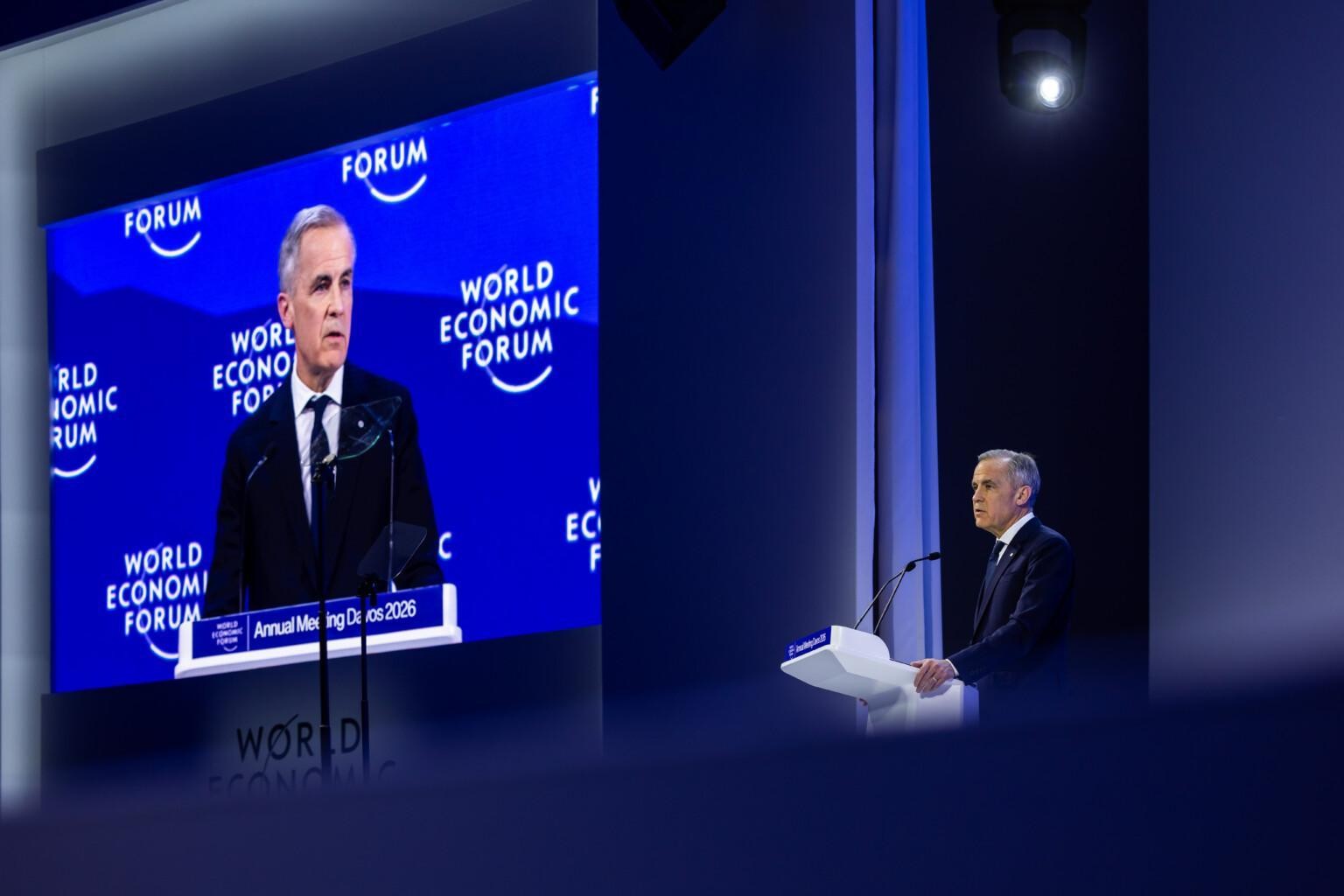
Against the background of intensifying great-power rivalry and a possible return to sphere-of-influence politics, 2026 witnessed a wave of calls to arms by so-called middle powers. Canadian Prime Minister Mark Carney, speaking at the Davos Economic Forum, declared that the old global order was dead and gone and urged middle powers to forge functional coalitions. Finnish President Alexander Stubb similarly made a strong case for values-based realism, advocating plurilateral, purpose-built coalitions of the willing while continuing to strive for a revival of multilateralism. Foreign-policy analysts such as Stewart Patrick have alluded to “the middle power moment”, pointing to the key role that second-tier powers can play in sustaining international cooperation and in finding functional solutions in a world where UN institutions and norms are under threat.
Yet the discussion remains largely abstract, raising the more basic question of how to understand “middle powerdom”. Is there a coherent agenda that middle powers pursue, and by what means do they seek to pursue it? Will middle powers “save” multilateral cooperation, or will they rather rebrand it? And where does Europe, whose very DNA is rooted in multilateralism, fit into the picture?
Scholars and pundits often describe a middle power as a state with considerable power that nonetheless falls short of great-power status. Middle powers cannot shape the international system on their own, but they can exert influence through so-called niche diplomacy and active engagement on specific issues where they hold expertise or capacity. They often position themselves as mediators in global affairs, with a marked preference for multilateral solutions. Australia, Brazil, Canada, Indonesia, Norway, the Republic of Korea, and Turkey are among the states most frequently cited as examples.
Middle powers stand to lose out when the rules-based international order is in decline.
The debate on middle powers reveals a few commonalities among this otherwise diverse grouping of countries. To start with, the term “middle power” is a form of self-identification. Carney’s Canada and Anthony Albanese’s Australia readily embrace the label, and many smaller states have followed suit, as it helps leaders explain their foreign policy course to domestic audiences in turbulent times. Second, what middle powers have in common is that they stand to lose out when the rules-based international order is in decline or when multilateralism comes under threat. They share the will not to let competition between the United States and China become the sole determinant of the future international order. Third, middle powers express a genuine willingness to treat emerging states from the Global South as important partners in sustaining multilateral cooperation. They describe themselves as bridge-builders between the old order and the new one that is slowly taking shape.
The middle power narrative, therefore, has a common thread. Their battle cry as custodians of the rules-based order and saviours of multilateral cooperation in institutionally and normatively dire times has obvious appeal. Underlying it is a plea for “second-tier” states to act as active agents, not passive bystanders, at a time when the foundations and contours of the international order are being overhauled.
In protecting and revamping multilateral cooperation, the tools available to and utilised by middle powers are not, per se, unique. While they openly embrace loose networking beyond formal institutional cooperation as well as “ad hocism”, the chosen formats depend on the issue at hand and are often described through concepts such as variable geometry, flexilateralism or multi-alignment. Working with a broad range of partners in different constellations, including through informal networks such as the G20 or the BRICS, is a sign of middle powerdom in action. The essence of middle power cooperation is thus rooted in pragmatism and a recognition that values are not universally shared. For the EU, the challenge is to defend multilateral cooperation without insisting that it must always take place through existing institutions.
The real test is how much agency middle powers can exercise in a system still dominated by great powers.
Indeed, one of the important dilemmas for middle powerdom is the absence of a shared agenda or common ideological backbone. A critical fault line separates Canada, Japan, and the Nordics from Global South middle powers such as India, Turkey, Indonesia, Brazil and South Africa. The former aim to preserve the largely Western-created order that has generally served their interests, while the latter not only seek a stronger voice within it but also strive to substantially reform the current international system, including its institutions and norms.
Clout in international relations is also needed to provide public goods and address contemporary global challenges. This leaves middle powers in a paradoxical position: while great-power disengagement is accepted as a political reality, in practice they remain dependent on major powers. Many, including those in Europe and the Indo-Pacific, are also reluctant to alienate their allies, which leaves it unclear to what degree middle powerdom depends on the dominant states. Moreover, the discussions rarely ask whether the United States and China would, in practice, tolerate these countries exercising greater autonomy and influence. The real test, then, is how much agency middle powers can exercise in a system still dominated by great powers.
Why does this matter now?
Intensifying great-power rivalry is weakening multilateral cooperation at a time when global challenges require more, not less, collective action.
What needs to change?
Middle powers need to become better able to advance their interests and values independently of great powers, especially the United States.
What needs to be done?
Middle power governments, as well as the EU and its member states, should use their collective leverage to secure binding commitments and institutional reform, strengthen domestic support, and pursue networked cooperation alongside traditional alliances.
Katja Creutz is Programme Director of the Global Security and Governance research programme. She is also an Affiliated Research Fellow with the Erik Castrén Institute at the University of Helsinki. Her main field of expertise is international law and especially issues of responsibility, human rights and global governance. Dr Creutz holds a Doctor of Laws degree (2015) and a Master of Laws programme degree from the University of Helsinki (2004) and a Master of Political Science from Åbo Akademi University (2000).
Bart Gaens is Senior Research Fellow in the Global Security and Governance research programme at the Finnish Institute of International Affairs. From May 2021 to April 2023, he led a project on connectivity in the Indo-Pacific region. He also holds the title of Docent at the Faculty of Arts at the University of Helsinki.
This text was published as part of the HSF 2026 Report on October 2026. You can read all articles from the report here.
Photo: 2026 World Economic Forum / Ciaran McCrickard
The era of single-solution security is over: Helsinki Security Forum 2026 explores new layers of security
The era of single-solution security is over. In a world shaped by disruption and competition, resilience no longer stems from…

Miten Suomi turvataan? Helsinki Security Forum -konferenssi käynnistyy avoimella keskustelutilaisuudella
Suomen turvallisuusympäristö monimutkaistuu. Venäjän strateginen voimapolitiikka, kansainvälisten riippuvuuksien hyödyntäminen valtapolitiikan välineinä sekä suurvaltojen kasvavat etupiirivaateet horjuttavat sääntöpohjaista järjestelmää. Samalla Yhdysvaltain…

Call for Applications: Youth Delegates for Helsinki Security Forum 2025
Are you a young professional interested in foreign and security policy? Would you be interested in taking part in Helsinki…
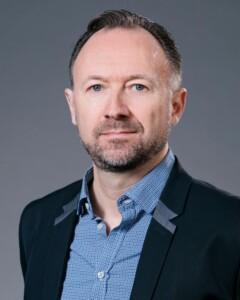
About the author
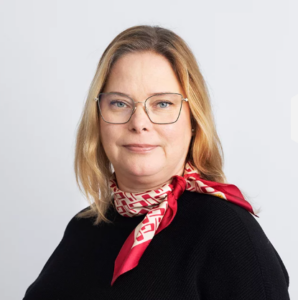
Katja Creutz & Bart Gaens
Programme Director & Senior Research Fellow
Katja Creutz is the Programme Director of the Global Security and Governance research programme. She is also an Affiliated Research Fellow with the Erik Castrén Institute at the University of Helsinki. Her main field of expertise is international law and especially issues of responsibility, human rights and global governance. Dr Creutz holds a Doctor of Laws degree (2015) and a Master of Laws programme degree from the University of Helsinki (2004) and a Master of Political Science from Åbo Akademi University (2000).
Creutz has previously worked as Research Fellow at the Erik Castrén Institute of International Law and Human Rights of the University of Helsinki. She is the former Executive Editor of the Finnish Yearbook of International Law. She has published extensively on responsibility in international law, non-state actors, human rights and Nordic issues.
Bart Gaens is Senior Research Fellow in the Global Security and Governance research programme at the Finnish Institute of International Affairs. From May 2021 to April 2023, he led a project on connectivity in the Indo-Pacific region. He also holds the title of Docent at the Faculty of Arts at the University of Helsinki.
In the past Gaens has worked as Project Director for FIIA’s Center on US Politics and Power (CUSPP), Professor of Japanese Studies at the University of Helsinki, and Specially-Appointed Associate Professor at Osaka University in Japan. He has published widely on Europe-Asia inter-regionalism and the Asia-Europe Meeting (ASEM) process, Japan’s foreign policy and regional role, India’s foreign policy and relations with the EU, domestic politics in Myanmar, and security-related issues in the Indo-Pacific region.